The INSAT Series: India's Multipurpose Satellite Backbone
Explore the legacy of ISRO's INSAT series. Discover how these multipurpose satellites have revolutionized India's communication, broadcasting, and weather forecasting since 1983.
 admin
admin
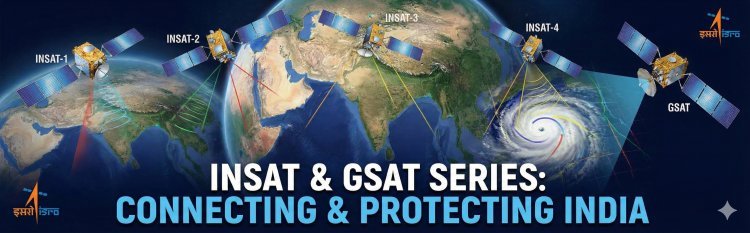
The Indian National Satellite (INSAT) system is one of the largest domestic communication satellite systems in the Asia-Pacific region.
A defining characteristic of the INSAT system is its multipurpose nature.
Evolution Through Generations
The INSAT program has evolved through several generations of satellites, each marked by technological advancements and increased capabilities.
INSAT-1 Series (The Beginning): The first-generation INSAT-1 satellites were built by Ford Aerospace in the USA to India's specifications.
INSAT-2 Series (Indigenous Development): The INSAT-2 series marked a significant milestone as these satellites were indigenously designed and built by the Indian Space Research Organisation (ISRO). Launched in the 1990s, this series (2A, 2B, 2C, 2D, 2E) demonstrated India's self-reliance in satellite technology.
INSAT-3 Series (Enhanced Capabilities): The third generation, launched in the early 2000s, further expanded the system's capacity and capabilities.
INSAT-4 Series (Direct-to-Home Focus): The INSAT-4 series, launched from 2005 onwards, was primarily designed to meet the growing demand for high-power Ku-band transponders for Direct-to-Home (DTH) television broadcasting services.
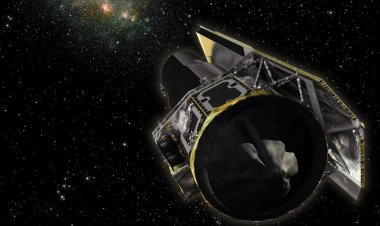
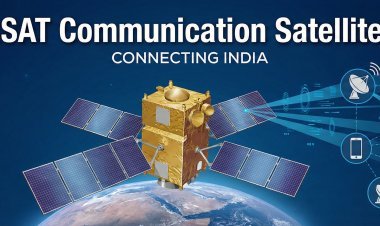
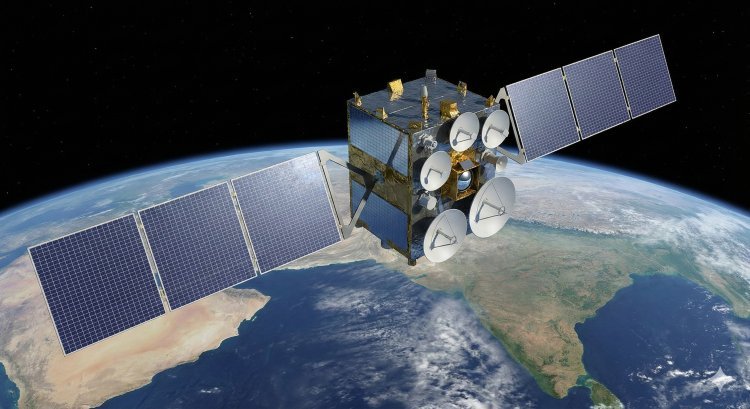
Below is a representative image of an INSAT series satellite in its geostationary orbit, illustrating its large solar arrays for power generation and multiple antennas for communication and data transmission.
Key Applications and Impact
The INSAT system has had a profound and far-reaching impact on various facets of life in India.
1. Revolutionizing Communications and Broadcasting
-
Telecommunications: INSAT satellites provide the backbone for long-distance telephone calls, data transmission, and satellite-based internet services, especially in remote and inaccessible areas like islands and mountainous regions where terrestrial connectivity is difficult.
-
Doordarshan, the national broadcaster, uses INSAT for its national and regional services. The INSAT-4 series, in particular, fueled the boom in private Direct-to-Home (DTH) satellite TV services, bringing hundreds of channels to millions of households.
2. Meteorology and Disaster Management One of the most critical roles of the INSAT system is in weather forecasting and disaster warning.
-
Cyclone Monitoring: INSAT's continuous monitoring helps in tracking cyclones from their formation stage, predicting their path and intensity, and issuing timely warnings.
This has been instrumental in saving countless lives during severe weather events like cyclones Phailin, Hudhud, and Fani. -
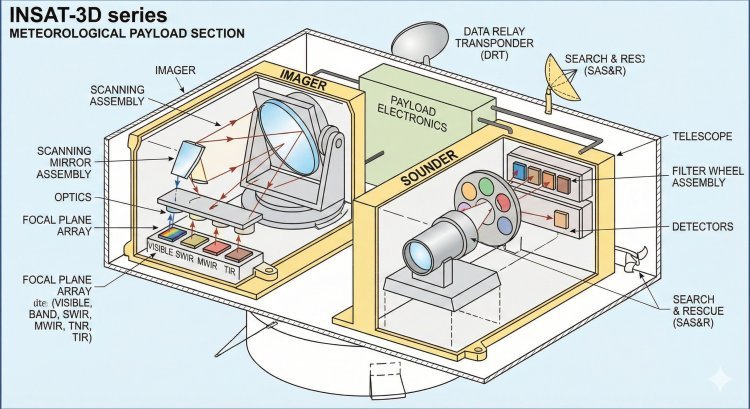
Weather Instrumentation: These satellites carry sophisticated instruments like a 6-channel Imager and a 19-channel Sounder.
The Imager provides images of the earth and clouds in visible and infrared spectral bands, while the Sounder provides vertical profiles of temperature and humidity in the atmosphere.
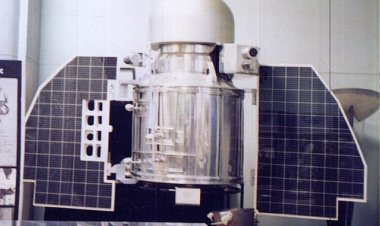
The following diagram illustrates the complex meteorological payload section of an INSAT-3D series satellite, showing the arrangement of the Imager and Sounder.
3. Search and Rescue INSAT satellites carry a Satellite Aided Search and Rescue (SAS&R) transponder that picks up distress signals from emergency beacons on ships and aircraft.
Launching the Satellites
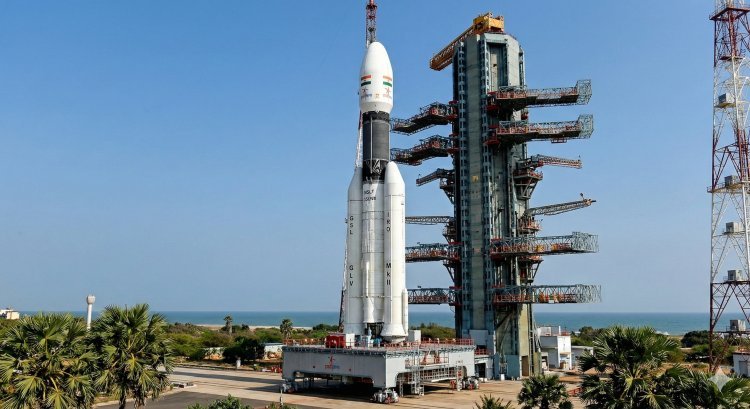
To place these heavy satellites into geostationary orbit, India developed its own powerful launch vehicles. The Geosynchronous Satellite Launch Vehicle (GSLV) is the primary rocket for launching INSAT class satellites.
The GSAT Connection
As the communication needs of the country grew exponentially, ISRO started a separate series of satellites called GSAT (Geosynchronous Satellite) to supplement and eventually replace the aging communication satellites in the INSAT fleet.