GSAT: The Backbone of India's Communication Revolution
Explore ISRO's GSAT series. Discover how these indigenous satellites revolutionise India's telecommunications, broadband, and broadcasting services.
 admin
admin
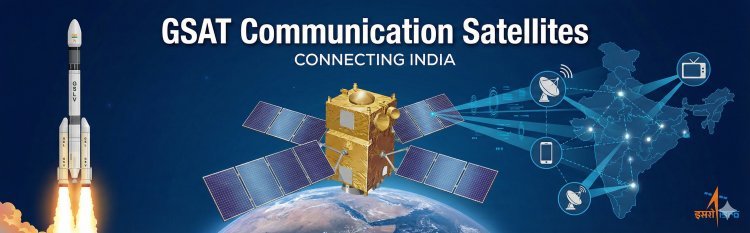
The GSAT (Geosynchronous Satellite) series is a family of indigenously developed communication satellites from the Indian Space Research Organisation (ISRO). These satellites are the unseen workhorses that power a vast array of services, from the television channels we watch to the internet connectivity in remote corners of the country. They are crucial for India's telecommunication infrastructure and play a vital role in national development.
The Journey and Evolution
The GSAT program is the successor to the earlier INSAT system, which was a multipurpose satellite series.
The journey began with experimental satellites like GSAT-1 (launched in 2001) and GSAT-2, which were used to test new technologies and payloads.
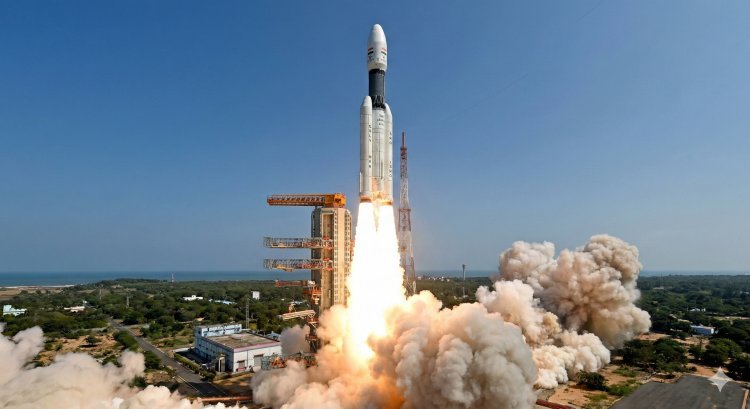
The launch of a GSAT is a spectacular event. These heavy satellites are placed into a Geostationary Transfer Orbit (GTO) by India's powerful launch vehicles, such as the Geosynchronous Satellite Launch Vehicle (GSLV).
Understanding the Technology
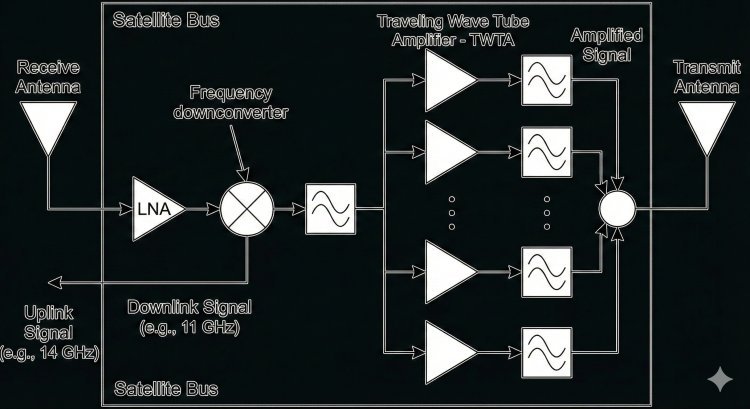
At the heart of a GSAT's function are its transponders. These are the devices that receive signals from Earth, amplify them, and re-transmit them back to a large area on the ground.
-
C-band: Known for its reliability, especially in rainy conditions, it is widely used for television distribution and telecommunications.
-
Ku-band: Offering higher power and smaller antenna sizes, it is the primary band for Direct-to-Home (DTH) television services and VSAT (Very Small Aperture Terminal) networks.
-
Ka-band: The latest generation of high-throughput satellites (like GSAT-11, GSAT-19, and GSAT-29) use the Ka-band to provide high-speed broadband connectivity, enabling services like in-flight internet and connecting rural areas.
A simplified diagram of a satellite transponder payload is shown below. It illustrates the path of a signal as it is received, converted, amplified, and transmitted.
Applications that Connect a Nation
The impact of the GSAT series is felt in the daily lives of millions of Indians. Its applications are diverse and far-reaching:
-
Telecommunications: GSATs provide the backbone for long-distance telephone and data networks, connecting different parts of the country.
-
Broadcasting: The explosion of satellite television channels in India is a direct result of the capacity provided by GSATs. They enable the distribution of TV signals to cable operators and directly to homes via DTH.
-
VSAT Services: Businesses, banks (for ATMs), and government agencies use VSAT networks powered by GSATs for reliable and secure connectivity.
-
Societal Applications:
-
Tele-education: Satellites like GSAT-3 (EDUSAT) were specifically launched to provide distance education to thousands of classrooms across the country.
-
Tele-medicine: GSATs connect remote health centers with specialty hospitals in cities, enabling consultations and expert medical advice for patients in rural areas.
-
-
Disaster Management: During natural disasters when terrestrial networks fail, satellite communication is often the only lifeline for relief and rescue operations.
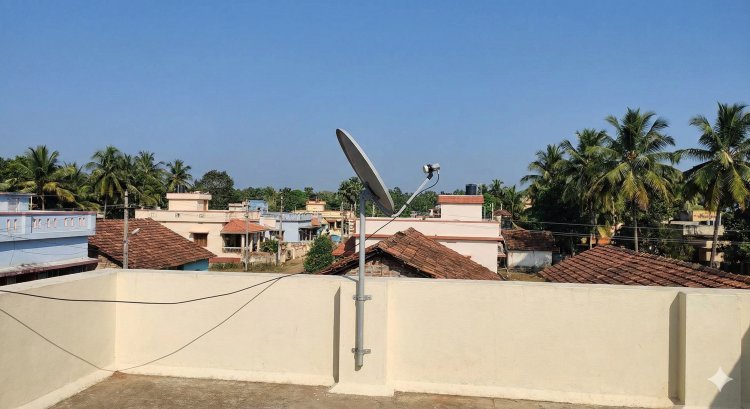
The image below shows a common sight across India: a small satellite dish on a rooftop, which receives DTH television signals directly from a GSAT satellite.