Chandrayaan-1 (2008): India's Historic First Mission to the Moon
 admin
admin
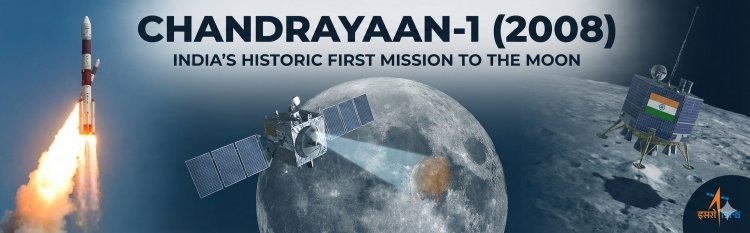
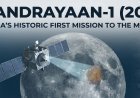
On October 22, 2008, the Indian Space Research Organisation (ISRO) etched its name in history with the successful launch of Chandrayaan-1, India's first unmanned lunar probe.
The Journey Begins: A Perfect Launch
The mission began at the Satish Dhawan Space Centre in Sriharikota, Andhra Pradesh. The spacecraft was launched atop a Polar Satellite Launch Vehicle (PSLV-C11), one of ISRO's most reliable workhorses.
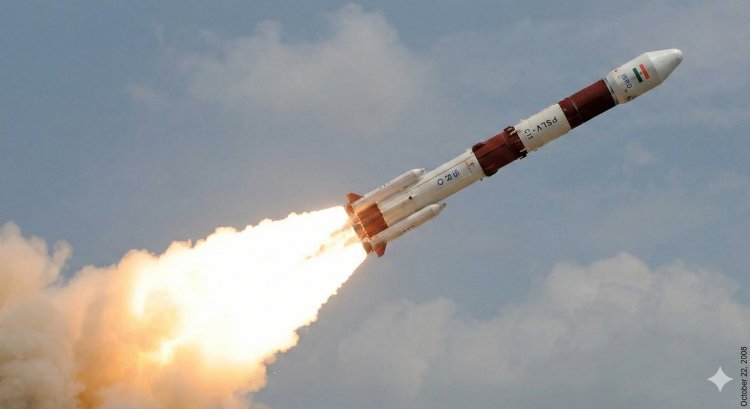
Following the launch, the spacecraft performed a series of complex orbital maneuvers, gradually raising its orbit over a period of about two weeks.
The Spacecraft and its Scientific Arsenal
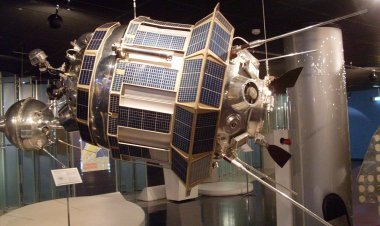
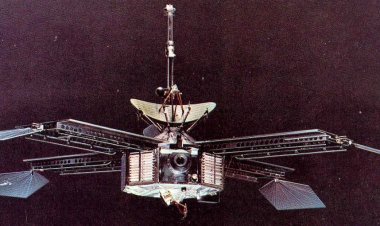
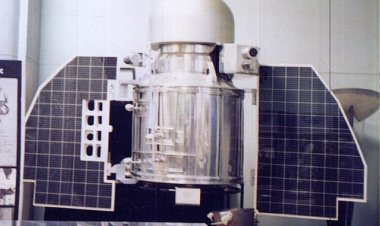
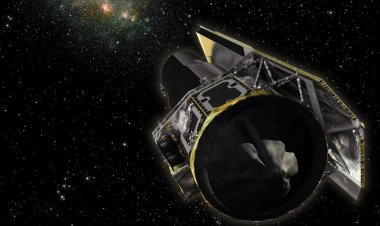
The Chandrayaan-1 spacecraft was a 1,380 kg cube-shaped satellite.
The orbiter carried a total of 11 scientific instruments, a remarkable mix of indigenous and international payloads. Five were designed and developed by ISRO, while the remaining six were from NASA, ESA, and the Bulgarian Academy of Sciences. These instruments were designed to create a 3D atlas of both the near and far sides of the Moon, and to map the distribution of chemical elements and minerals.
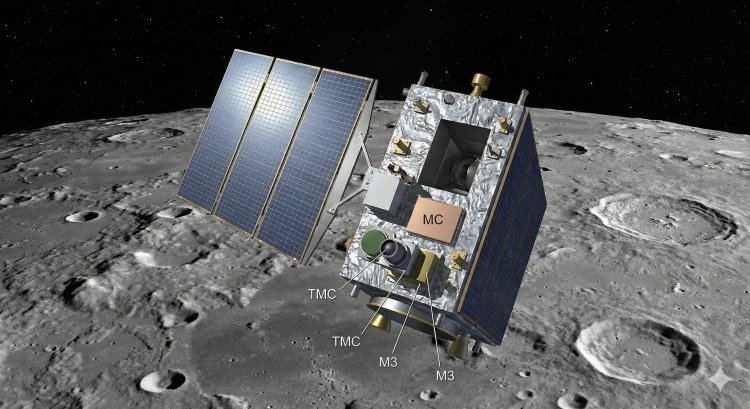
Some of the key instruments included:
-
Terrain Mapping Camera (TMC): An ISRO payload that provided high-resolution, 3D maps of the lunar surface.
-
Moon Mineralogy Mapper (M3): A NASA imaging spectrometer that became the mission's most famous payload.
-
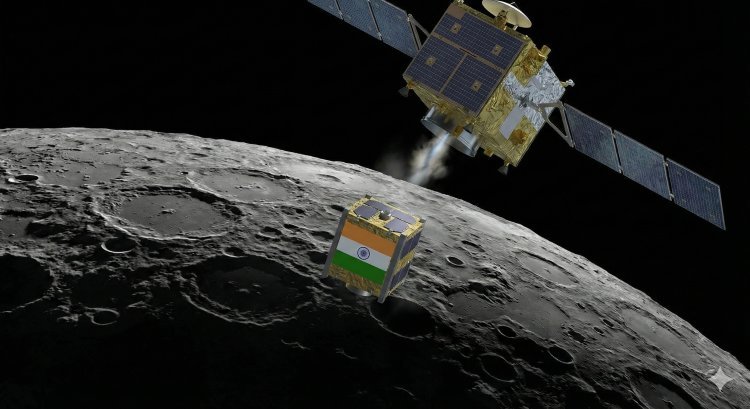
Moon Impact Probe (MIP): An ISRO-developed impactor that we will discuss in the next section.
The Moon Impact Probe (MIP): Touching the Lunar Surface
A highly symbolic and scientifically important part of the mission was the Moon Impact Probe (MIP).
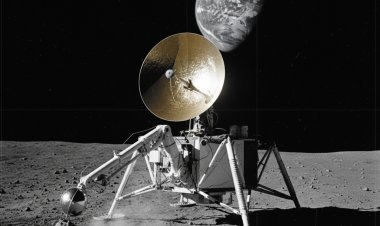
As it descended towards the Moon's south pole, the MIP's instruments—a video imaging system, a radar altimeter, and a mass spectrometer—were active, sending back valuable data about the lunar atmosphere and surface. The probe successfully crashed into the lunar surface near the Shackleton Crater, making India the fourth country to place a flag on the Moon.
A Major Discovery: Water on the Moon
The most significant and path-breaking discovery of the Chandrayaan-1 mission was the confirmation of water molecules (H2O) and hydroxyl ions (OH) on the lunar surface.
The M3 detected absorption features near 2.8-3.0 micrometers in the reflected sunlight from the Moon, which is a characteristic signature of water and hydroxyl. This finding challenged the long-held belief that the Moon was a completely dry and desolate body. The data indicated that the water was present in very small quantities in the lunar soil, but its presence was widespread, with higher concentrations towards the poles. This discovery has had profound implications for our understanding of the Moon's history and its potential for future human exploration.
Other Key Achievements
Besides the discovery of water, Chandrayaan-1 achieved several other significant milestones:
-
High-Resolution Mapping: The TMC provided some of the most detailed 3D maps of the lunar surface ever obtained, covering over 70,000 images.
-
Mineral Mapping: The M3 instrument created the first comprehensive mineralogical map of the lunar surface.
-
X-ray Fluorescence: The X-ray instruments on board detected signals of elements like magnesium, aluminum, silicon, calcium, and iron on the lunar surface.
-
Radiation Environment: The Radiation Dose Monitor (RADOM) payload provided valuable data on the radiation environment around the Moon.
Mission End and Legacy
The Chandrayaan-1 mission was planned for a two-year operational life.
Despite its premature end, Chandrayaan-1 was an overwhelming success. It had completed over 3,400 orbits around the Moon and had achieved more than 95% of its primary scientific objectives.
Chandrayaan-1 was a watershed moment for India's space program. It demonstrated the country's ability to design, build, launch, and operate a complex interplanetary mission. It laid the foundation for future ambitious projects, including the Mars Orbiter Mission (Mangalyaan) and the subsequent Chandrayaan-2 and Chandrayaan-3 missions.