The Spitzer Space Telescope: Unveiling the Invisible Universe in Infrared
 admin
admin
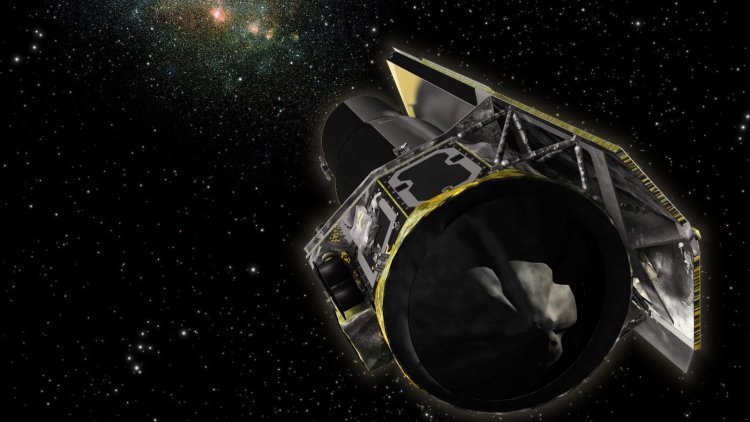
Hidden behind cosmic veils of dust and gas, much of the universe remains invisible to our eyes and conventional telescopes. For more than 16 years, the Spitzer Space Telescope—NASA’s unsung “infrared eye in the sky”—peered into these hidden realms, revealing the birthplaces of stars, the structure of exotic galaxies, and even the atmospheres of planets orbiting distant suns. Spitzer’s groundbreaking work fundamentally changed our understanding of stellar evolution, planetary systems, and even the origins of life in the cosmos.
A Revolutionary Vision: The Origins of Spitzer
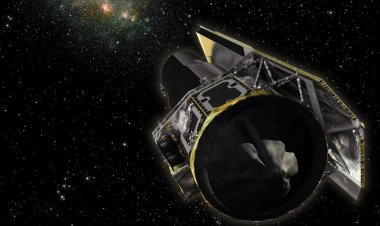
NASA’s Spitzer Space Telescope was the fourth and final spacecraft in the agency’s “Great Observatories” program, following the Hubble Space Telescope, the Compton Gamma Ray Observatory, and the Chandra X-ray Observatory. Launched on August 25, 2003, aboard a Delta II rocket from Cape Canaveral, Florida, Spitzer was initially named the Space Infrared Telescope Facility (SIRTF) but was later renamed in honor of astrophysicist Lyman Spitzer Jr., a pioneer in the field of space telescopes.
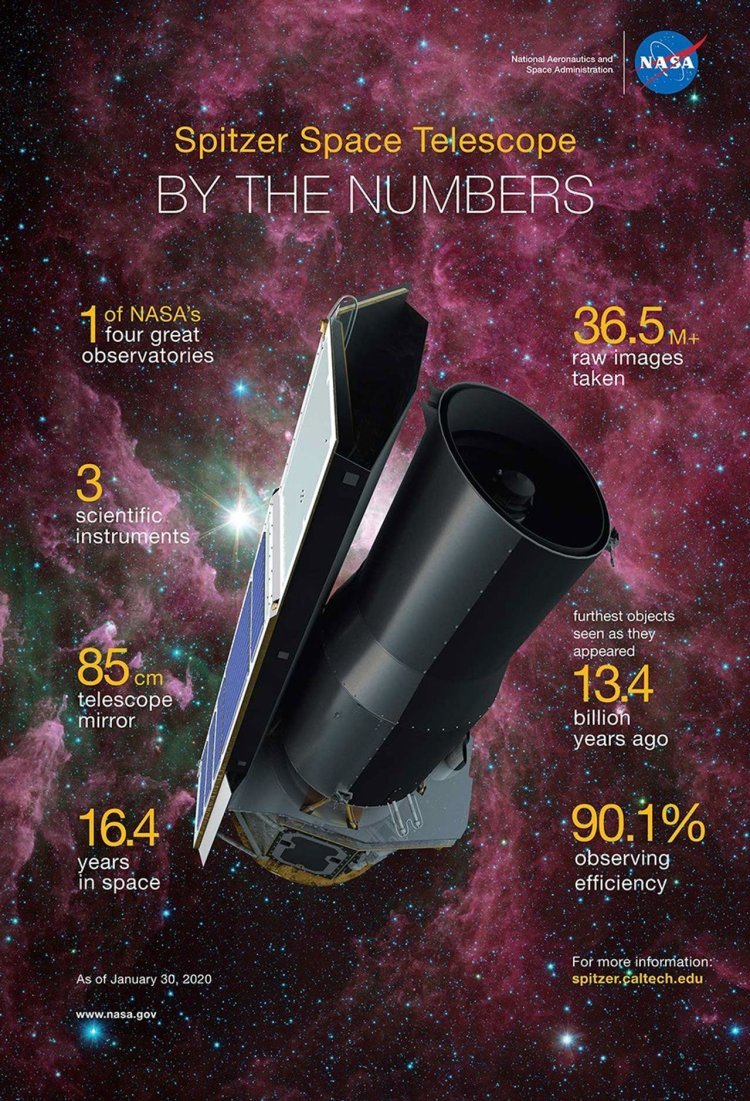
Spitzer’s design was highly innovative. At just 4.5 meters tall and 2.1 meters in diameter, with a launch mass of about 950 kg—less than a compact car—it was a relatively small observatory by space telescope standards. Its 85-centimeter (33-inch) primary mirror, made of lightweight beryllium, focused infrared light onto three cutting-edge scientific instruments. But Spitzer’s real magic was in its orbit: instead of circling Earth like Hubble, Spitzer followed an Earth-trailing solar orbit, receding from us at about 0.12 AU per year. This unique path kept it away from Earth’s heat and light contamination, making it an ideal platform for infrared astronomy.
Groundbreaking Instruments: Seeing the Unseen
Spitzer carried three principal instruments, designed to cover a broad range of the infrared spectrum, from near- to far-infrared wavelengths:
-
Infrared Array Camera (IRAC): Captured images at four infrared wavelengths (3.6, 4.5, 5.8, and 8 microns), ideal for studying star-forming regions, young stars, and even the atmospheres of exoplanets.
-
Infrared Spectrograph (IRS): Provided detailed spectra of celestial objects, revealing their chemical composition and physical conditions.
-
Multiband Imaging Photometer for Spitzer (MIPS): Operated at longer infrared wavelengths (24, 70, and 160 microns), perfect for studying dusty galaxies, comet tails, and cold interstellar clouds.
All three instruments were cooled by liquid helium to suppress their own heat and keep them sensitive to faint cosmic signals. Once the helium ran out in 2009, Spitzer entered its “warm mission,” continuing science with the two shortest-wavelength channels of IRAC until the mission’s conclusion in January 2020.
Key Discoveries: From Galactic Nurseries to Alien Worlds
-
First Detection of Exoplanet Light: Spitzer was the first telescope to directly detect light from a planet beyond our solar system—a feat that opened a new era in exoplanet science.
-
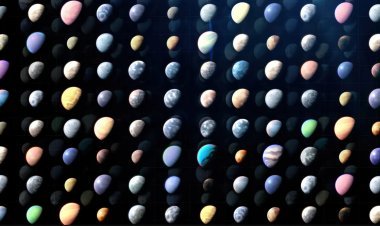
TRAPPIST-1: Spitzer studied the TRAPPIST-1 system, revealing seven Earth-sized planets—three in the habitable zone where liquid water could exist—and laying the foundation for future searches for life beyond Earth.
-
Weather Maps of Exoplanets: Spitzer made the first exoplanet weather map, showing temperature variations on a giant exoplanet’s atmosphere.
Star and Planet Formation
-
Stellar Nurseries: Spitzer unveiled the hidden nurseries where stars and planets are born, providing unprecedented views of dusty disks around young stars—the cradles of future planetary systems.
-
Organic Molecules: Spitzer detected complex organic molecules—“building blocks for life”—in interstellar clouds, hinting that the ingredients for life may be widespread throughout the galaxy.
Galaxies and Cosmic Structure
-
Galactic Centers: Spitzer peered into the hearts of galaxies, including our own Milky Way, revealing supermassive black holes and the complex structures of spiral arms.
-
Most Distant Galaxy: Spitzer helped identify some of the most distant galaxies ever seen, pushing our observational limits to the edge of the observable universe.
-
Supernova Remnants: Spitzer’s images of exploded stars revealed intricate networks of dust and gas, illuminating how heavy elements forged in stellar explosions are dispersed through space.
Our Own Solar System
-
Comet Dust Tails: Spitzer mapped the structure of comet dust tails and studied their composition, shedding light on the early solar system.
-
Saturn’s Giant Ring: Spitzer discovered a mammoth, faint ring of Saturn—too diffuse to be seen from Earth but stretching 300 times the diameter of the planet itself.
Iconic Images: Beauty in the Invisible

Spitzer’s infrared eye transformed our aesthetic appreciation of the cosmos as much as it advanced our scientific understanding. Its colorful images—many created by assigning false colors to different infrared wavelengths—revealed the artistic complexity of cosmic clouds, interstellar dust, and galaxy clusters.
Pillars of Creation and Beyond: In partnership with Hubble, Spitzer provided complementary views of famous nebulae like the Eagle Nebula’s Pillars of Creation and the Orion Nebula. While Hubble revealed the dust columns sculpted by starlight, Spitzer mapped the warm dust within, highlighting areas of active star formation.
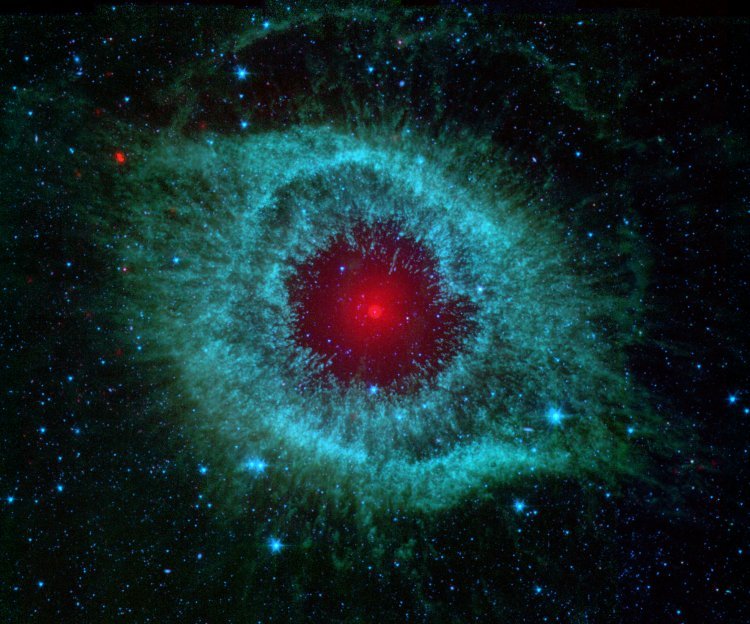
Helix Nebula: Spitzer’s view of the Helix Nebula—a dying star’s expanding shell—shows the intricate structure of ejected gas and dust, with faint halos invisible to optical telescopes.
Double Helix Nebula: Spitzer’s images revealed a twisting, DNA-like structure near the Milky Way’s center, likely sculpted by the galaxy’s powerful magnetic fields.
Innovation and Legacy
Spitzer’s engineering breakthroughs—especially its innovative thermal design and Earth-trailing orbit—paved the way for future infrared space observatories like the James Webb Space Telescope (JWST). Its discoveries have inspired a new generation of astronomers and engineers, and its data archive continues to yield scientific breakthroughs years after the telescope’s retirement.
Spitzer’s End: After over 16 years of operation and more than 100,000 hours of observations, NASA decommissioned Spitzer on January 30, 2020. Its legacy, however, endures in the thousands of scientific papers that have deepened our understanding of the universe—from the coldest, darkest molecular clouds to the farthest reaches of space and time.
Spitzer showed us that the universe is even more dynamic and beautiful than we had imagined—with wonders waiting to be discovered in every corner of the sky, visible not to our eyes, but to the sensitive instruments and the curious minds that launch them into the unknown.