Surveyor Program -NASA historic Moon mission
 admin
admin
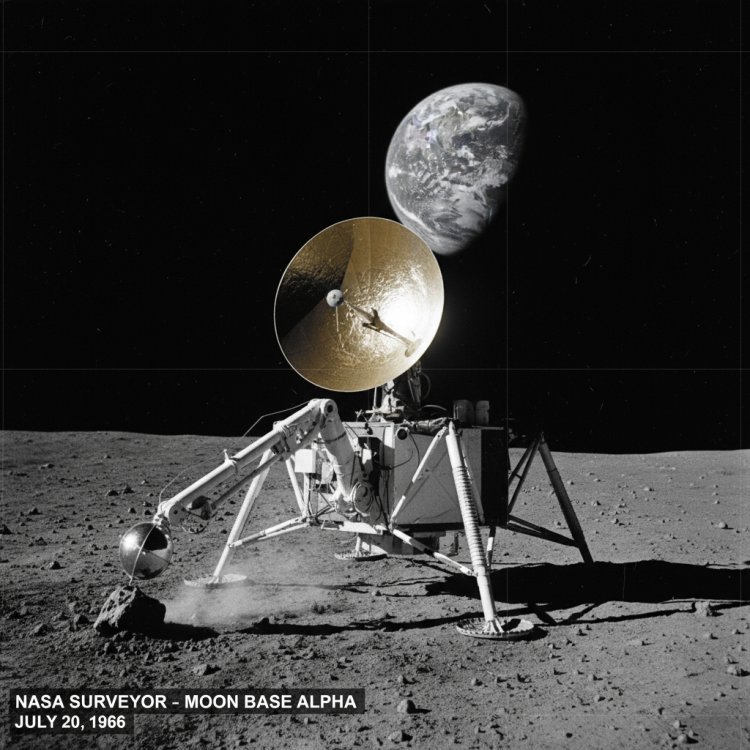
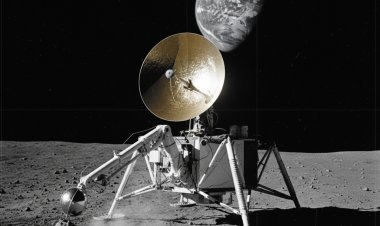
The Surveyor program was a landmark initiative by NASA, which from June 1966 through January 1968 successfully sent a series of seven robotic spacecraft to the surface of the Moon. The main objective was to demonstrate the feasibility of soft landings on the lunar surface, a vital precursor toward sending astronauts as part of the Apollo program. It marked the first time American spacecraft achieved a soft landing on another celestial body.
Program Background and Goals
-
The program was run out of NASA’s Jet Propulsion Laboratory (JPL) to set the stage for eventual Apollo crewed landings on the Moon.
-
Hughes Aircraft was chosen in 1961 to develop the Surveyor spacecraft systems.
-
The overall cost of the Surveyor program was officially $469 million.
-
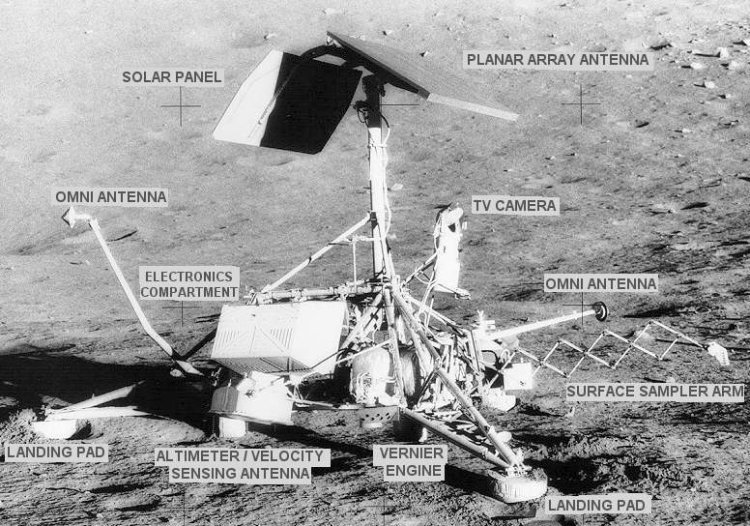
The missions were designed to test critical technologies: closed-loop landing guidance, throttleable engines, advanced radar systems, and spacecraft midcourse correction ability.
-
Instruments on some craft included robotic shovels (to measure lunar soil mechanics), alpha-scattering instruments, and magnets—to analyze the Moon's chemical properties.
-
These landers helped determine the depth, structure, and composition of lunar dust—a major unknown before their arrival—which was essential for future crewed missions.
Mission Profile and Engineering
-
Each Surveyor mission featured a single unmanned spacecraft, launched aboard an Atlas-Centaur rocket.
-
The trajectory took the craft directly toward the Moon for an impact trajectory, a journey lasting about 63 to 65 hours.
-
Rather than entering lunar orbit, the crafts braked just before lunar impact, using a solid-fuel retrorocket followed by vernier engines running on liquid fuel.
-
The final few meters before touchdown were completed in free fall to minimize surface contamination.
-
Landing weights were around 295–306 kg, while launch masses ranged from about 995 to 1,040 kg.
Achievements & Outcomes
-
Five of the seven Surveyor craft achieved soft landings on the Moon, including the very first one.
-
The remaining two: Surveyor 2 failed after a midcourse correction mishap and crashed at high speed, while Surveyor 4 lost contact (possibly exploding) 2.5 minutes prior to scheduled landing.
-
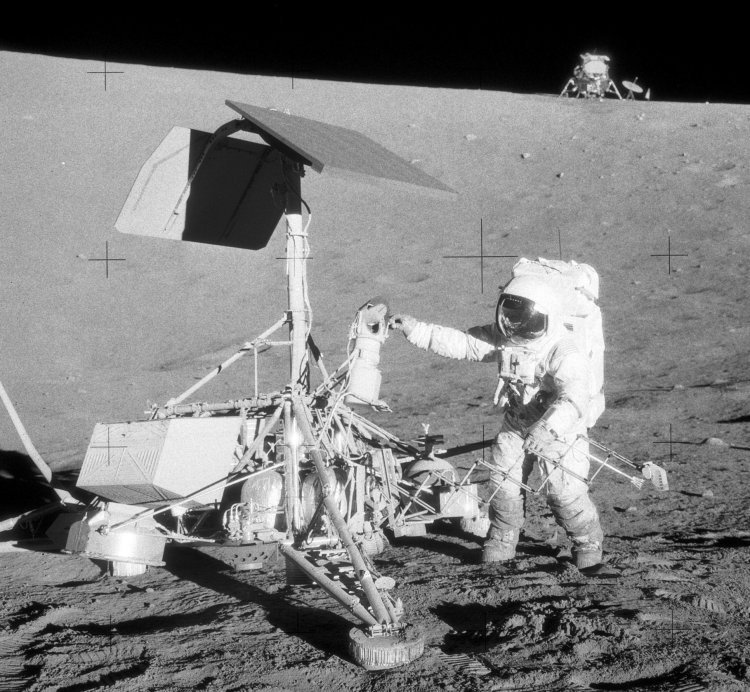
All landed Surveyors remain to this day on the Moon, except select components from Surveyor 3, which were retrieved by Apollo 12 astronauts and returned to Earth.
Science and Legacy
-
Surveyor missions returned engineering, environmental, and scientific data that were critical for Apollo planning.
-
The craft proved the Moon’s surface could support landings—a concern prior to their missions.
-
Their simple, robust design solved major challenges in propulsion and guidance for planetary landers.
Individual Surveyor Missions
Surveyor 1
-
Launched: May 30, 1966; Landed: June 2, 1966 (Oceanus Procellarum).
-
Highlights: First American spacecraft to soft land on the Moon. Transmitted video and engineering data for several weeks.
Surveyor 2
-
Launched: September 20, 1966.
-
Outcome: Lost control after a failed mid-course correction; crashed.
Surveyor 3
-
Launched: April 17, 1967; Landed: April 20, 1967 (Mare Cognitum, Oceanus Procellarum).
-
Highlights: Returned 6,315 TV images, including Earth as seen from the Moon. Later visited by Apollo 12; parts were brought back to Earth.
Surveyor 4
-
Launched: July 14, 1967.
-
Outcome: Lost telemetry 2.5 minutes before touchdown (likely explosion).
Surveyor 5
-
Launched: September 8, 1967; Landed: September 11, 1967 (Mare Tranquillitatis).
-
Highlights: Successfully collected and transmitted extensive data (19,118 images).
Surveyor 6
-
Launched: November 7, 1967; Landed: November 10, 1967 (Sinus Medii).
-
Highlights: First vehicle ever to lift off the lunar surface and land again (statically hopped).
Surveyor 7
-
Launched: January 7, 1968; Landed: January 10, 1968 (Tycho Crater’s rim).
-
Highlights: Operations included the spacecraft observing laser beams sent from Earth observatories, showing optimum success for its science goals.
Surveyor Program List
Here are the main flight missions:
| Mission | Launch Date | Lunar Arrival | Outcome/Location |
|---|---|---|---|
| Surveyor 1 | May 30, 1966 | June 2, 1966 | Landed, Oceanus Procellarum |
| Surveyor 2 | Sept 20, 1966 | Sept 23, 1966 | Crashed |
| Surveyor 3 | Apr 17, 1967 | Apr 20, 1967 | Landed, Oceanus Procellarum |
| Surveyor 4 | Jul 14, 1967 | Jul 17, 1967 | Crashed, Sinus Medii |
| Surveyor 5 | Sept 8, 1967 | Sept 11, 1967 | Landed, Mare Tranquillitatis |
| Surveyor 6 | Nov 7, 1967 | Nov 10, 1967 | Landed, Sinus Medii |
| Surveyor 7 | Jan 7, 1968 | Jan 10, 1968 | Landed, near Tycho crater |
Importance in the Space Race
The Surveyor program was central to America’s success in the Space Race, coming just four months after Luna 9’s Soviet landing. The lessons, engineering data, and confidence from Surveyor missions were indispensable for the successful Apollo crewed landings that followed.