A Complete History of the Soviet Union's Luna Moon Programme
 admin
admin
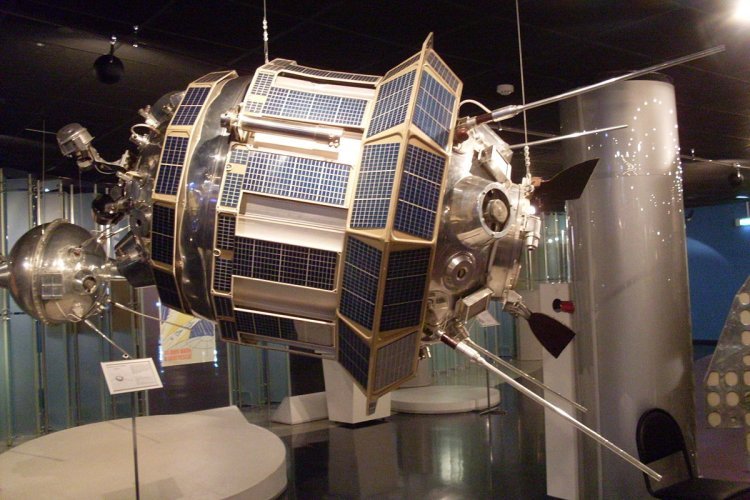
The Soviet Luna programme was a trailblazing sequence of robotic lunar missions conducted from the late 1950s through the 1970s. Designed to explore the Moon, the Luna missions not only competed with the United States during the Space Race but set numerous significant milestones in space exploration history.
Early Missions and Firsts
-
In 1957, after launching the first two Sputniks into space (including Laika, the first living creature in orbit), the Soviets aimed for an even greater achievement: reaching the Moon.
-
On January 4, 1959, Luna 1 became the first human-made object to escape Earth's gravity, flying past the Moon at 6,000 km distance. It was accidentally a flyby, having missed a direct lunar impact.
-
On September 13, 1959, Luna 2 became the first spacecraft to impact the Moon, its journey confirmed internationally by scientists at Jodrell Bank Observatory in the UK.
-
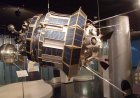
Just weeks later, Luna 3 (October 4, 1959) orbited the Moon and took the first-ever photographs of its far side, revealing features never before seen by humanity. Because digital technology didn't yet exist, Luna 3 used traditional film, processing and beaming the images back to Earth.
-
The Soviets and Americans entered a period marked by failures and incremental progress. The Soviet Luna programme, like NASA’s Ranger and Surveyor, faced many setbacks: failed launches, missed lunar targets, and crash landings.
-
Key landings:
-
Luna 4 (1963), Luna 5 (1965), Luna 6 (1965), and Luna 7 (1965) all failed to achieve a soft landing for various technical reasons.
-
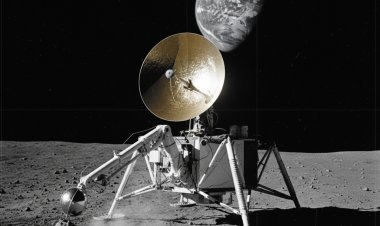
Luna 9 (January 31, 1966) finally succeeded. It became the first spacecraft to conduct a controlled soft landing on the Moon and returned the first panoramic images from the lunar surface.
-
US Competition and Soviet Response
-
While Luna 9 made history, the US's Surveyor 1 did the same later that year—with more advanced scientific instruments.
-
The Soviets pressed on with orbiter missions (Luna 10, 11, 12, 14), while their landers (Luna 13, 1966) brought basic scientific equipment, but lagged in capabilities compared to American landers.
Human Lunar Ambitions
-
The Soviets secretly attempted to develop their own crewed lunar landing programme, but found themselves outmatched by US spending and resources.
-
Instead, they moved to prove robotic missions could match or surpass manned ones in terms of accomplishment and cost-efficiency.
Sample Return Missions
-
Luna 15 (1969) was a hurried sample-return attempt timed to compete with Apollo 11, but crashed into the lunar surface.
-
Luna 16 (1970) succeeded, returning 101g of lunar soil to Earth – a fraction of the Apollo samples, but at far less expense.
-
Luna 20 (1972) brought back 50g from a mountainous region. Luna 23 failed, but Luna 24 (1976) collected and returned 170g of lunar material, ending the era on a high note.
The Lunokhod Rovers
-
Luna 17 (1970) delivered Lunokhod 1, the first robotic rover to explore another celestial body. Operated remotely from Earth, it traveled over 10.5 km.
-
Luna 21 (1973) delivered Lunokhod 2, which set a distance record (42 km) that stood for decades.
-
These missions significantly advanced the understanding of the Moon’s surface, and data from their explorations is still used today.
Legacy
-
The Luna programme paused after Luna 24 as Soviet interest pivoted towards Venus (Venera missions) and Mars.
-
The Soviets' lunar findings, once secret, are now shared with the world. Their legacy continues to influence modern lunar missions and engineering, as current Moon landings take Luna programme findings into account—such as those for NASA’s Artemis programme.
-
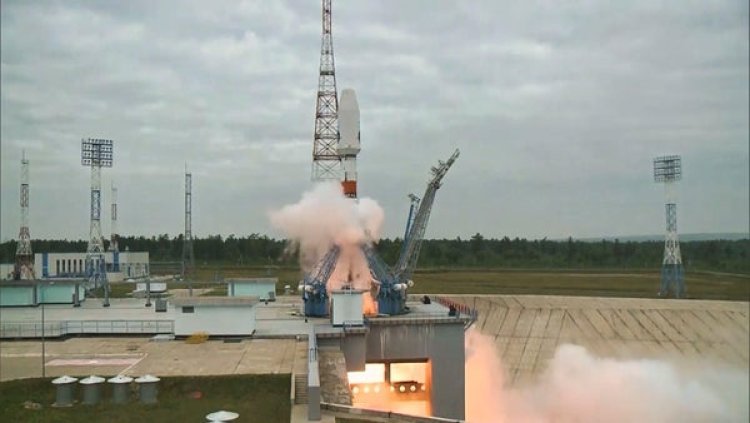
Most recently, Luna 25 (2023) signaled a Russian return to the Moon, though it unfortunately crashed during its attempted landing.