Mariner 4: Humanity's First Close-Up Flyby of Mars (1965)
Mariner 4: NASA's Mariner 4 flew by Mars on July 14, 1965, capturing 21 groundbreaking images of craters & barren terrain from 6,118 miles away.
 David
David
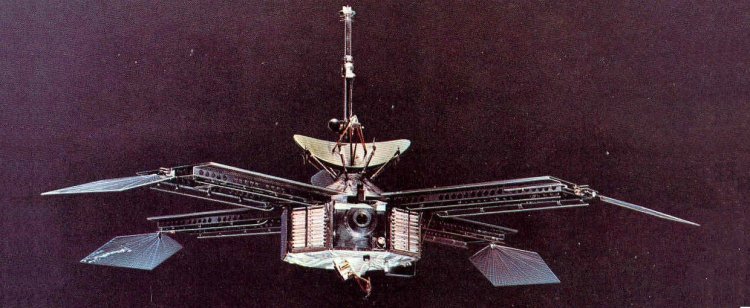
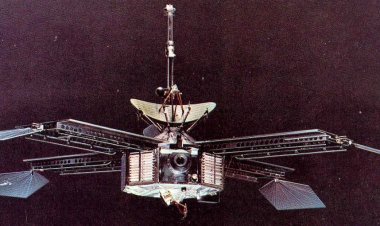
Mariner 4, launched by NASA on November 28, 1964, achieved the historic first flyby of Mars on July 14-15, 1965, delivering the first close-up images of another planet and shattering romanticized views of a canal-laced world. After a 228-day journey covering 307 million miles, the 260-kg spacecraft passed within 6,118 miles (9,846 km) of Mars' surface, capturing 21 grainy black-and-white photos that revealed a cratered, barren desert.
Mission Background
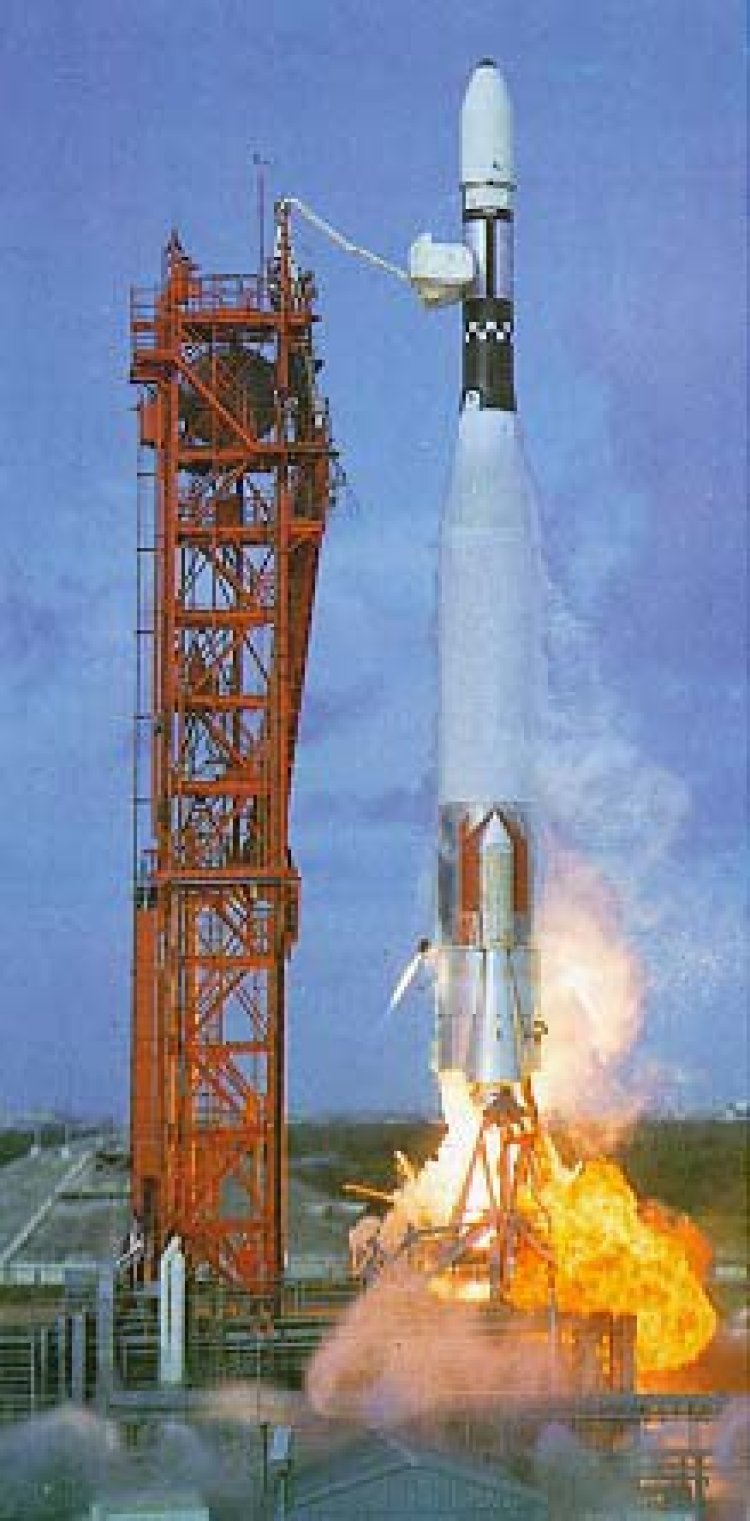
NASA's Mariner Mars 1964 project, approved in November 1962, aimed to send twin probes for flyby reconnaissance, building on Mariner 2's Venus success in 1962. Managed by NASA's Jet Propulsion Laboratory (JPL), the program featured the Atlas-Agena D rocket. Sister craft Mariner 3 launched November 5, 1964, but failed when its fiberglass payload shroud jammed, preventing solar panel deployment—it drifted inert into solar orbit.
A redesigned all-metal shroud enabled Mariner 4's flawless liftoff from Cape Canaveral's Launch Complex 12 at 19:22:05 UTC. Midcourse corrections on July 5 and 14, 1965, refined the trajectory using Canopus star-tracker navigation.
Spacecraft Design
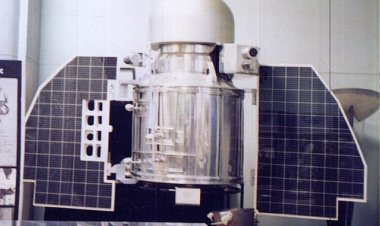
Mariner 4 measured 4.2 meters tall with twin solar panels spanning 6.8 meters, generating 310 watts. It carried seven instruments totaling 10 kg:
-
Imaging system: 1.23-megapixel vidicon camera with 984x984 resolution.
-
Cosmic dust detector, cosmic ray telescope, ionization chamber.
-
Helium magnetometer, trapped radiation detector, solar plasma probe.
Thermal control used louvers and radioisotope heaters; data rates peaked at 8.3 kbps during flyby, with images transmitted at 8.3 bits/second.
Flyby and Science Results
Instruments activated July 14 as Mariner 4 approached Mars at 10,955 mph (4.9 km/s). The closest approach at 22:05:07 UTC occurred behind Mars from Earth, enabling radio occultation to measure atmospheric density (thin CO2 envelope, ~0.6% Earth's sea-level pressure).
Playback of 21 images (one partial) began post-occultation, completing by August 3. They showed ~1% of Mars' surface: craters 3-124 km wide, no canals or vegetation, confirming a moon-like landscape. No global magnetic field detected; radiation levels safe for electronics but hostile for life.
Legacy and Operations
Mariner 4 operated until 1972, relaying data from solar orbit and setting a communication record of 190 million miles in 1965. Contact briefly lost in 1967 due to antenna misalignment but resumed; final signals ended December 21, 1971, after battery failure.
This success paved the way for orbiters like Mariner 9 (1971) and Viking landers (1976), proving robotic planetary flybys viable. It influenced public perception, shifting Mars from sci-fi oasis to arid world, and advanced imaging tech for future missions.