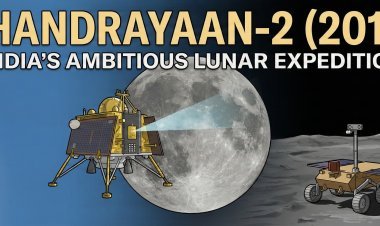
Chandrayaan-2 (2019): India's Ambitious Lunar Expedition
 admin
admin
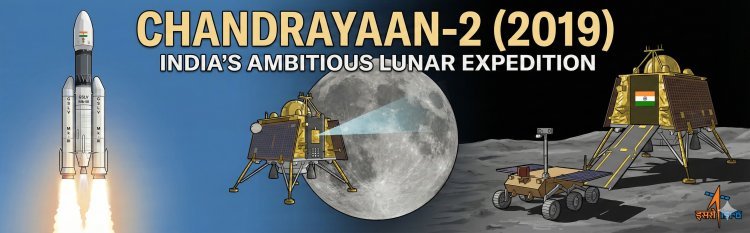
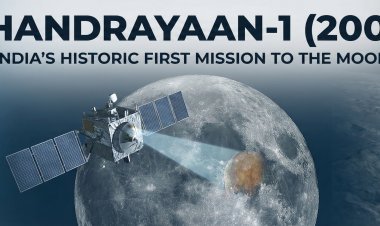
Chandrayaan-2, launched on July 22, 2019, was India's second lunar exploration mission, building upon the groundbreaking success of Chandrayaan-1.
A Complex and Ambitious Mission Profile
Chandrayaan-2 was a significantly more complex mission than its predecessor, consisting of three primary modules:
-
Orbiter: Designed to orbit the Moon at an altitude of 100 km, equipped with advanced scientific payloads for remote sensing.
-
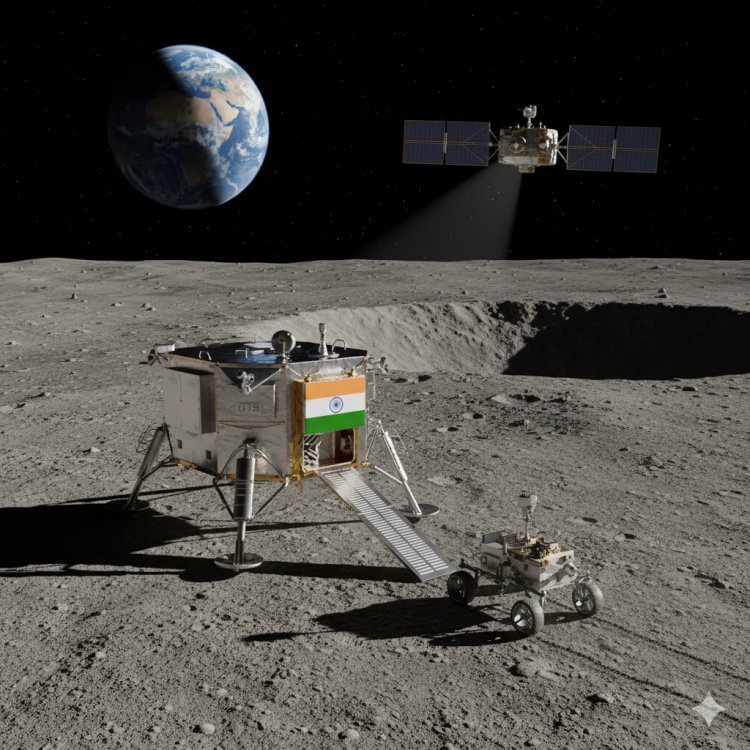
Lander (Vikram): Named after Dr. Vikram Sarabhai, the father of the Indian space program, its primary goal was to achieve a soft landing on the lunar surface.
-
Rover (Pragyan): A six-wheeled robotic vehicle, housed inside the Vikram lander, designed to explore the lunar surface and conduct in-situ analysis of the lunar soil and rocks.
The primary objective was to understand the Moon's origin and evolution through detailed studies of its topography, mineralogy, elemental abundance, and the presence of water ice.
The Majestic Launch: GSLV Mk-III
The mission was launched from the Satish Dhawan Space Centre in Sriharikota, using ISRO's most powerful launch vehicle, the GSLV Mk-III (Geosynchronous Satellite Launch Vehicle Mark III), also nicknamed 'Bahubali'.
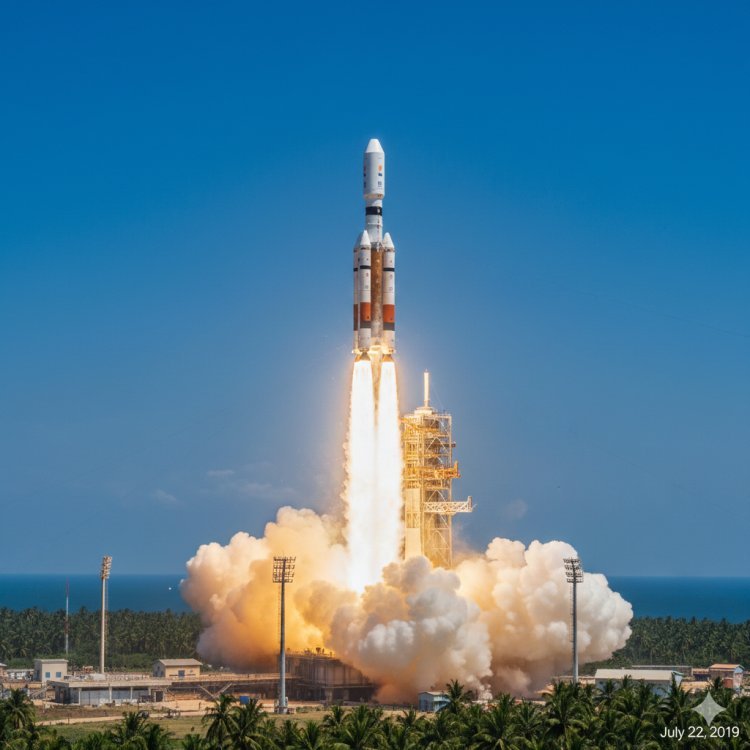
After a series of Earth-bound maneuvers to build up velocity, the spacecraft successfully performed a Lunar Orbit Insertion (LOI) on August 20, 2019, entering orbit around the Moon.
The Lander and Rover: Vikram and Pragyan
The Vikram lander was equipped with four main payloads:
-
RAMBHA-LP (Langmuir Probe): To measure lunar plasma density.
-
Chandra's Surface Thermophysical Experiment (ChaSTE): To study the thermal properties of the lunar surface.
-
ILSA (Instrument for Lunar Seismic Activity): To detect moonquakes.
-
LASER Retroreflector Array (LRA): A passive instrument from NASA for precise lunar ranging studies.
-
Pragyan, the rover, carried two instruments:
-
APXS (Alpha Particle X-ray Spectrometer): To determine the elemental composition of the lunar surface.
-
LIBS (Laser Induced Breakdown Spectroscope): To identify the abundance of elements like magnesium, aluminium, silicon, potassium, calcium, titanium, and iron.
The rover's mission life was one lunar day (approximately 14 Earth days), during which it was expected to traverse about 500 meters.
-
The Descent and the Glitch
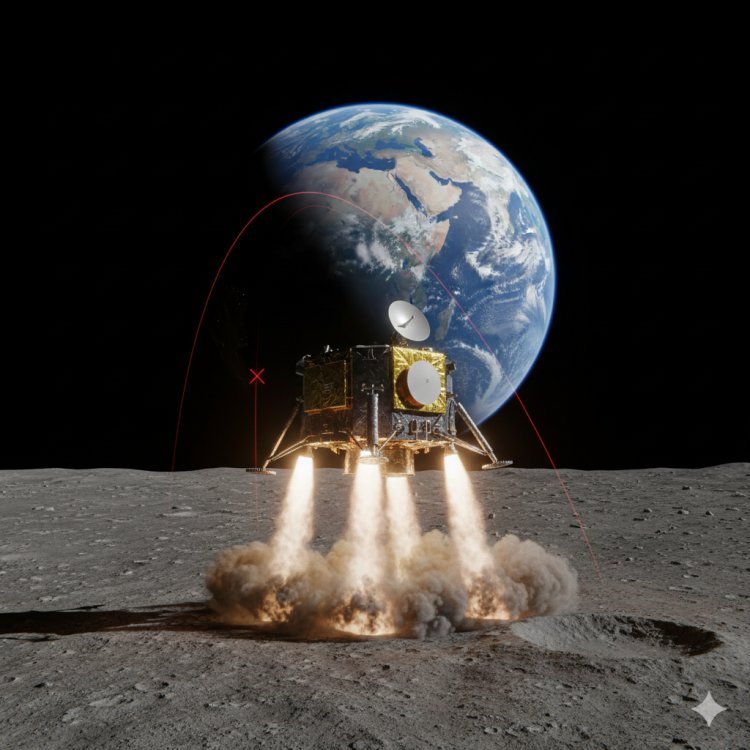
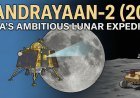
The most critical and challenging phase of the mission was the soft landing of the Vikram lander. On September 7, 2019, Vikram began its powered descent towards the lunar surface. The initial phases of the descent were executed perfectly, with the lander slowing down and turning as planned. However, just minutes before the scheduled landing, when Vikram was about 2.1 kilometres above the lunar surface, ISRO lost communication with the lander.
Subsequent analysis indicated that a glitch in the braking system during the "fine braking phase" caused the lander to deviate from its intended trajectory and crash-land on the Moon, just 500 meters from its target site. The image below depicts the lander during its final descent, highlighting the complex maneuvers involved.