Mars 1M: The Soviet Union’s Dawn of Mars Exploration
 admin
admin
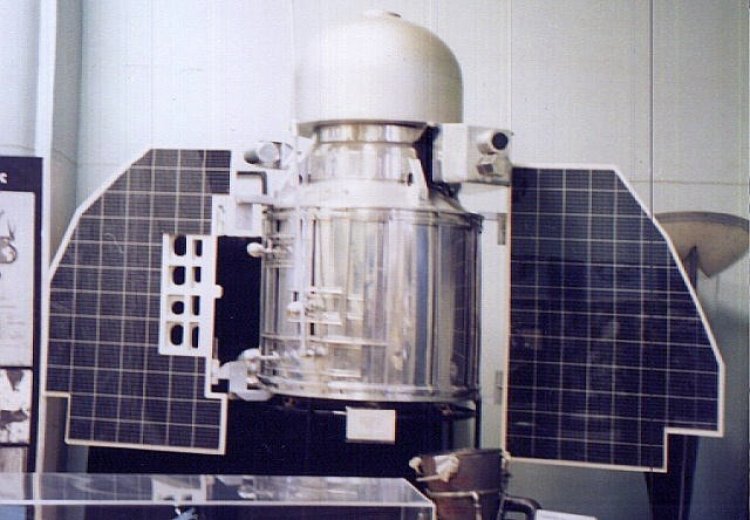
Mars 1M was the first attempt by the Soviet Union to send spacecraft to Mars, marking the start of planetary exploration beyond Earth and the Moon. The program consisted of two identical spacecraft, Mars 1M No.1 and Mars 1M No.2 (often referred to in the West as "Marsnik 1" and "Marsnik 2"), both launched in October 1960.
Mission Objectives
-
Research Interplanetary Space: Investigate conditions between Earth and Mars, including cosmic rays, solar plasma, and micrometeorites.
-
Study Mars: Conduct a scientific examination of Mars during a flyby—no landing was planned.
-
Return Images: Capture and transmit the first close-up images of the Martian surface using an onboard photo-television camera.
-
Test Technology: Demonstrate and test Soviet spacecraft and launch vehicle technology, including deep-space communications, solar power, and guidance systems.
-
Compete in the Space Race: As part of the Cold War, the mission was also a demonstration of Soviet technological prowess and a bid to be first to Mars.
Spacecraft Design
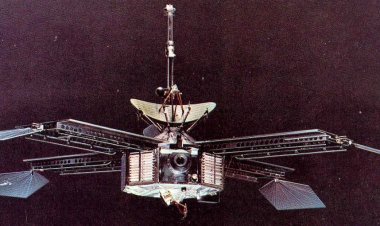
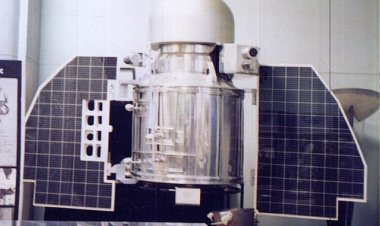
The Mars 1M spacecraft were cylindrical, about 2 meters tall, with two solar panels for power. They had a high-gain net antenna for deep-space communication and carried a suite of scientific instruments mounted externally. The camera system was sealed in a module, designed to photograph Mars through an optical port when the sunlit side came into view.
Scientific payload included:
-
Magnetometer
-
Cosmic ray detector
-
Plasma-ion trap
-
Radiometer
-
Micrometeorite detector
-
Spectroreflectometer (to study the CH band, a possible sign of life)
Attitude control was managed via Sun and star sensors, with a chemical rocket for corrections. Power came from solar panels charging silver-zinc batteries, and communication used decimeter and 8-cm wavelength bands for telemetry and images.
Launch and Outcome
-
Mars 1M No.1 (Marsnik 1): Launched October 10, 1960. The third stage of the Molniya rocket malfunctioned, and the spacecraft was destroyed before reaching Earth orbit.
-
Mars 1M No.2 (Marsnik 2): Launched October 14, 1960. Also failed during launch due to a similar third-stage issue. The spacecraft reached only about 120 km altitude before reentering the atmosphere.
Neither spacecraft left Earth’s vicinity, and no scientific data was returned.
Historical Context
-
First Mars Attempts: Mars 1M were the world’s first missions targeting Mars, predating NASA’s Mariner 4 by four years.
-
Technical Challenge: The failures highlighted the difficulty of early interplanetary missions, especially with the unproven Molniya rocket.
-
Secrecy and Dispute: Details about these missions were initially obscured by Soviet secrecy. Some involved scientists later claimed only the second launch was intended for Mars, but primary sources indicate both were planned as Mars flybys.
-
Legacy: Despite the failures, Mars 1M set the stage for later, more successful Soviet Mars missions, such as Mars 2 and Mars 3 in the 1970s.
Summary Table
| Mission | Launch Date | Objectives | Outcome | Notes |
|---|---|---|---|---|
| Mars 1M No.1 | 10 Oct 1960 | Flyby Mars, study space, return images | Launch failure | Also called Marsnik 1, Mars 1960A |
| Mars 1M No.2 | 14 Oct 1960 | Flyby Mars, study space, return images | Launch failure | Also called Marsnik 2, Mars 1960B |
Mars 1M represents a bold but ultimately unsuccessful opening chapter in Mars exploration. Though these spacecraft never left Earth, their ambitious goals and advanced instrumentation laid important groundwork for the era of interplanetary probes that followed.