NASA’s Exoplanet Count Reaches 6,000 – The Next Great Chapter of Exploration
 admin
admin
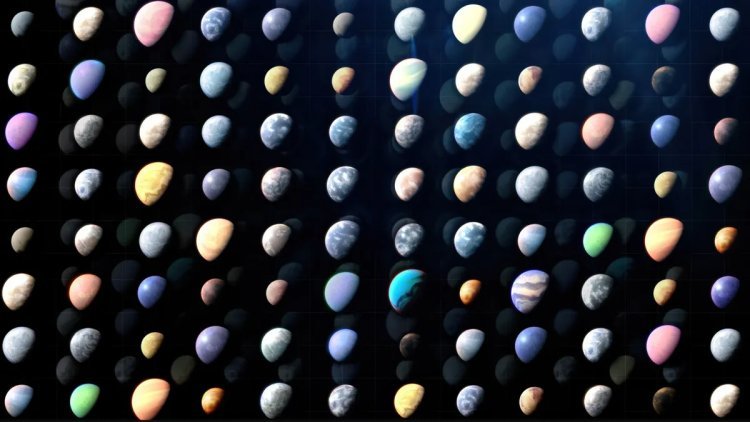
It may sound incredible, but NASA’s confirmed exoplanet tally has reached the remarkable milestone of 6,000 — and that’s after only about 30 years of searching for worlds outside our solar system. Just three years ago, the count was 5,000. This exponential increase is promising, as scientists believe there are billions more planets waiting to be discovered.
A narrator in NASA’s celebratory video explains, “We’re entering the next great chapter of exploration — worlds beyond our imagination. To look for planets that could support life, to find our cosmic neighbors and to remind us the universe still holds worlds waiting to be found.”
This news comes near the anniversary of the confirmation of the first exoplanet orbiting a sun-like star: 51 Pegasi b, discovered on October 6, 1995, about 50 light-years from Earth. While the very first exoplanet was actually found orbiting a neutron star (or pulsar) in 1992, 51 Pegasi b was the first ‘normal’ exoplanet to be recognized. Today, however, no single exoplanet holds the ‘6,000th planet’ title — NASA explains that “confirmed planets are added to the count on a rolling basis by scientists from around the world, so no single planet is considered the 6,000th entry. There are more than 8,000 additional candidate planets awaiting confirmation.”
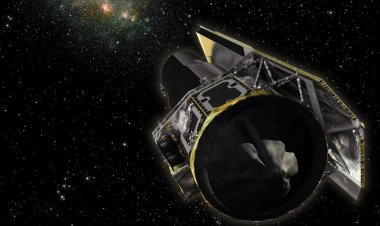
At the time of the article, NASA’s official count stood at 6,007 exoplanets. The spotlighted “new discovery” is KMT-2023-BLG-1896L b, a Neptune-like world about 16.35 times the mass of Earth. The vast majority of exoplanet finds come from NASA’s Kepler Space Telescope (which has found over 2,600) and TESS (Transiting Exoplanet Survey Satellite), which has identified over 693 to date.
Astounding Diversity of Alien Worlds
Each of those 6,007 planets is a unique world — and the variety is stunning:
-
2,035 Neptune-like worlds: These exoplanets, similar in size to Neptune or Uranus, have hydrogen and helium-dominated atmospheres and rocky, metallic cores.
-
1,984 gas giants: Think of them as the Jupiter cousins — massive and gaseous.
-
1,761 “Super-Earths”: Planets larger than Earth but not as big as Uranus or Neptune. Note: This term doesn’t mean they are Earth-like or habitable.
-
700 “terrestrial planets”: Rocky worlds, more like Earth or Mars.
-
7 of “unknown” types: Worlds we don’t fully understand yet.
Some exoplanets are more exotic than we could ever imagine: A world half-covered in lava, one made of diamond that can regrow its atmosphere, another hurtling through space at over a million miles per hour, or the real-life version of a hell-planet.
Why the Search for Exoplanets Matters
“Each of the different types of planets we discover gives us information about the conditions under which planets can form and, ultimately, how common planets like Earth might be, and where we should be looking for them,” says Dawn Gelino, head of NASA's Exoplanet Exploration Program. If we want to understand whether we are alone in the universe, this knowledge is vital.
Despite this incredible progress, there’s one type of planet scientists are still searching for: a true Earth twin — a planet just like ours. “There’s one we haven’t found — a planet just like ours. At least, not yet.”
Key Takeaways:
-
NASA has confirmed over 6,000 exoplanets and the rate of discovery continues to grow.
-
No one planet is the “6,000th” — planets are added continuously as discoveries are confirmed.
-
Exoplanets found so far include gas giants, Neptunes, super-Earths, rocky worlds, and several unknown types.
-
The ongoing search may soon lead us to find a planet truly similar to Earth — our “cosmic twin.”
-
The discoveries are not just numbers; each represents a complex, unique world and helps us understand our place in the universe.